A few weeks ago, I wrote a piece called "Beatitudes for Election Day", expanding upon the homily I had preached that weekend. I've received a lot of good feedback the homily and the post.
The idea was simple: the Beatitudes are not inspirational posters. They are counter-practices - habits of being that cut against the grain of a culture built on contempt.
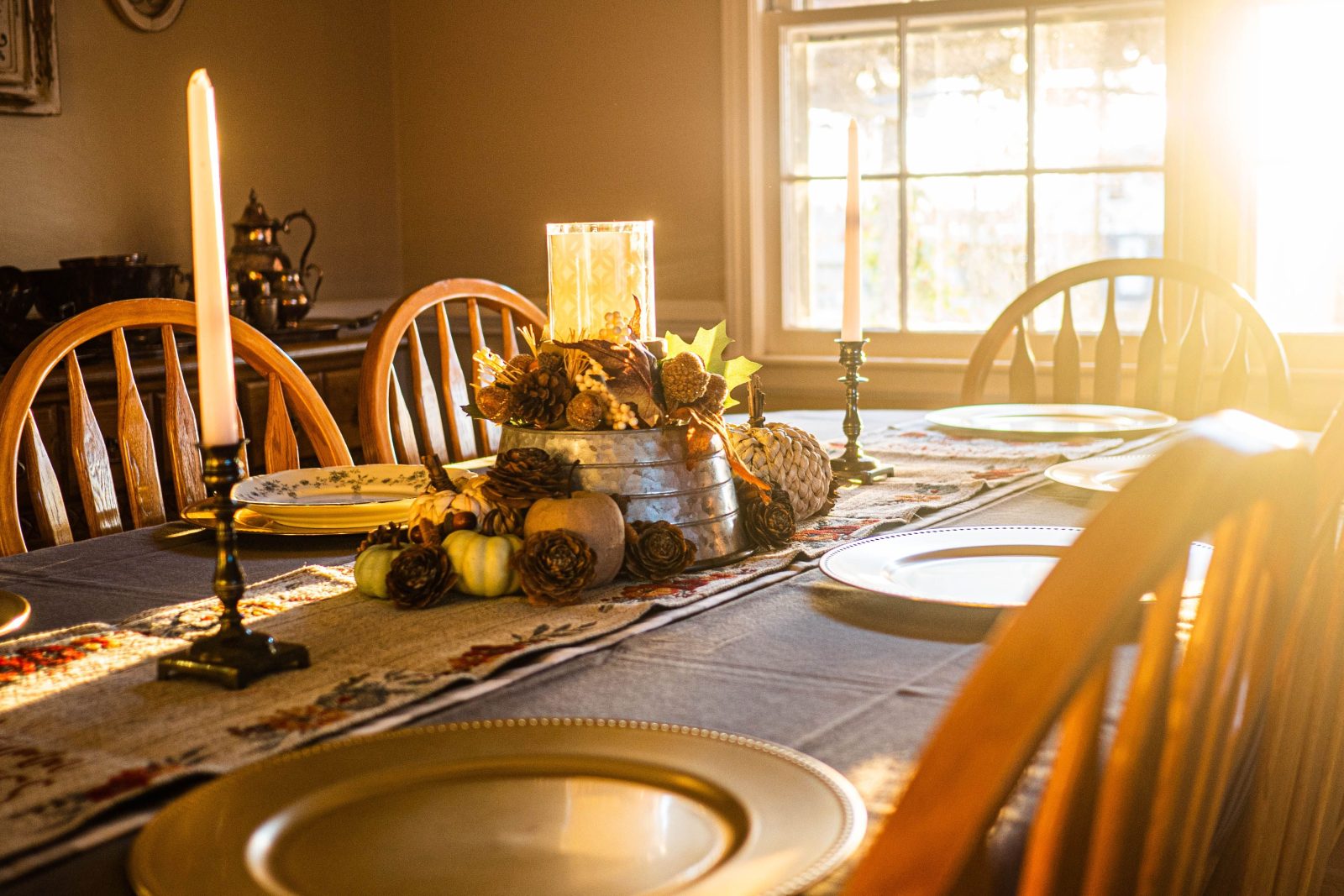
That piece was about the public square, the classroom, or the workplace. This one is about the dining room, because the culture of contempt does not stay on social media. It arrives at the table in the form of the relative who posts, the sibling who interprets silence as hostility, the in-law who takes the bait. It arrives in the motive-attribution asymmetry that turns a side dish into a referendum on someone's character.
And it arrives, for many of us, alongside an empty chair - a reminder that grief doesn't pause for the holidays.
The Beatitudes are not advice for fixing these dynamics. They are a portrait of a kind of person growing in grace - the kind of person who can sit at a complicated table and still be a blessing. The kind of person I am trying, and still often failing, to become.
The Research Behind the Wreckage
Before we get to Jesus, let's start with the data.
John Gottman spent decades studying marriages in his "Love Lab" at the University of Washington. He identified four behaviors that predict relationship breakdown with startling accuracy - he calls them the Four Horsemen: criticism, contempt, defensiveness, and stonewalling.
Contempt is the killer. It's the eye roll, the sarcastic tone, the sense that the other person is beneath you - not just wrong, but deficient. Gottman found that contempt is the single best predictor of divorce. When one partner treats the other with contempt, the relationship is in serious trouble.
Arthur Brooks, in Love Your Enemies, extends this insight to our national life. We are caught, he argues, in a "culture of contempt" - a habit of treating disagreement as evidence of moral deficiency. The person who disagrees with me is not just mistaken; they are bad. And once I've decided they're bad, I don't have to listen to them. I don't have to treat them as fully human.
Jonathan Haidt's research in The Righteous Mind explains why this happens so easily. We are tribal creatures. Our moral intuitions fire first, and our reasoning follows - usually to justify what we already felt. When someone from "the other side" speaks, our defenses go up before our ears open.
This is not a political problem - it is a human problem, and it follows us home.
The table where many of us will sit on Thursday is not neutral territory. It is a room full of people who have been swimming in the same contempt-soaked culture as everyone else. The question is whether we have any counter-practices strong enough to resist it.
Why the Beatitudes
Dallas Willard called the Beatitudes a "curriculum for Christlikeness." They are not a checklist. They are a portrait of a kind of character - the character of Jesus himself, offered to us as the pattern for human flourishing.
Pope Francis, in Gaudete et Exsultate, puts it bluntly: "The Beatitudes are in no way trite or undemanding, quite the opposite. We can appreciate them only if the Holy Spirit fills us with his power and frees us from our weakness, our selfishness, our complacency and our pride."
In other words, you cannot perform the Beatitudes. You can only be formed by them - slowly, over time, through practice and failure and grace.
What follows is not "eight tips for a peaceful Thanksgiving." It is an examination of conscience. These are the questions I am asking myself as I prepare to sit at my own table.
1. Blessed are the poor in spirit, for theirs is the kingdom of heaven.
The poor in spirit do not need to win the conversation.
This is harder than it sounds. I am a person who likes to be right. I have opinions. I have read the books. I have thought about the issues. And there is a part of me - a part I do not like but cannot deny - that wants to be seen as the smart one at the table.
The poor in spirit have let go of that. Not the opinions - you can hold strong convictions and still be poor in spirit. What they have let go of is the attachment to being recognized as right. The need to score the point. The quiet scorekeeping that tallies who won each exchange.
Willard writes that the poor in spirit are "those who have been devastated by the world's contempt and who know they have nothing to offer God but their need." They are not performing humility. They have simply been emptied of the pretense that they have it all figured out.
At the table, this looks like asking a question instead of making a point. It looks like saying "Tell me more about that" when every instinct wants to say "Here's why you're wrong." It looks like leaving the conversation without needing to have landed the final word.
I am not good at this. But I am trying to practice.
2. Blessed are those who mourn, for they will be comforted.
This one hits differently at Thanksgiving.
There is a chair at many tables that will be empty this year. A parent who didn't make it to this November. A spouse. A child. The holidays have a way of making absence louder - the traditions that depended on someone who is no longer there, the inside jokes that have no one left to tell them.
Those who mourn remember that grief is not an interruption of the holiday. It is part of the holiday. And they create space for it at the table.
This is countercultural. The world wants us to perform gratitude on Thursday - to plaster over the complicated feelings with a Norman Rockwell tableau. But the Beatitudes say that mourning is blessed. The table where we can speak the names of the dead - where we can say "Mom would have loved this" or "I keep reaching for my phone to call him" - is a table where something true is happening.
Those who mourn also remember that the person across the table - the uncle with the politics, the cousin with the opinions - is carrying something too. Their grief may not be visible. It may be wearing the mask of anger or defensiveness or bluster. But it is there.
Grief does strange things to people. Sometimes it makes them smaller and quieter. Sometimes it makes them louder and harder. The one who seems most eager to fight may be the one most desperate to be seen - to have someone acknowledge that this year has been brutal, that the holidays are not all gratitude and ease.
The Beatitude is not "blessed are those who fix the mourning." It is "blessed are those who mourn." Sometimes the most Christ-like thing you can do at a table is simply to let grief be present without rushing to resolve it.
3. Blessed are the meek, for they will inherit the earth.
Meekness is the most misunderstood of the Beatitudes. It sounds like weakness - like being a doormat, like letting people walk all over you.
It is the opposite.
The Greek word is praus - the same word used for a warhorse that has been trained to obey its rider. The horse is not weak. It is powerful. But its power is under control. It does not bolt at every provocation. It does not rear up at every loud noise. It has learned to channel its strength rather than be ruled by its reactions.
The meek do not escalate. When someone at the table says the thing designed to provoke - the political jab, the passive-aggressive comment, the old grievance dressed up as a joke - the meek do not take the bait.
This is not because they are pushovers. It is because they are free. They have done the work of recognizing their own triggers. They know what buttons get pushed and why. And they have practiced, over time, the discipline of choosing their response rather than simply reacting.
Gottman's research shows that the ability to self-soothe - to calm your own nervous system when you feel attacked - is one of the strongest predictors of relationship health. The meek have cultivated this capacity. They can feel the anger rise and choose not to let it drive.
At the table, meekness looks like a pause. The breath before the response. The decision to let a comment land without returning fire. It looks like staying in the room when every instinct says to storm out.
4. Blessed are those who hunger and thirst for righteousness, for they will be filled.
There is a difference between wanting to be right and wanting the truth.
Wanting to be right is about me. It is about my position, my argument, my tribe. It is about winning.
Wanting the truth is about something bigger than me. It is about the way things actually are - which may or may not align with what I currently believe.
Those who hunger for righteousness can say, "I might be wrong about this" - and mean it. They are more interested in finding the truth than in defending a position. They can hear a good argument from the other side and actually consider it, rather than immediately searching for the counter-argument.
This is rare. Haidt's research shows that most of us use our reasoning to justify what we already believe, not to discover what is true. We are lawyers, not scientists. We build cases; we don't run experiments.
At the table, hungering for righteousness looks like curiosity. It looks like asking "What led you to that view?" instead of "How could you possibly think that?" It looks like being genuinely interested in understanding, even when you're confident you disagree.
It also means caring about justice - about the people who are not at the table, whose lives are affected by the policies we debate so casually between bites of turkey. The hunger for righteousness is not satisfied by winning an argument. It is satisfied by the world becoming more just. And that requires the humility to learn, not just the cleverness to score.
5. Blessed are the merciful, for they will receive mercy.
The merciful remember that the person across the table is more than their worst moment.
Your cousin is not reducible to the thing they shared on Facebook. Your father-in-law is not identical with his vote. Your sister is not defined by the comment she made last Christmas that still stings.
Mercy is the refusal to reduce. It is the insistence on seeing the whole person - the one who taught you to ride a bike, the one who showed up at the hospital, the one who held you when you cried, even if they are also the one who said the thing you cannot forget.
This does not mean pretending the hurt didn't happen. Mercy is not amnesia. It is not "letting people off the hook" or refusing to hold boundaries. It is simply the recognition that the person who hurt you is still a person - still made in the image of God, still carrying their own wounds, still capable of growth and change.
Brooks writes about the difference between disagreement and contempt. You can disagree with someone vigorously - even passionately - without holding them in contempt. Contempt says, "You are beneath me." Mercy says, "You are still my kin."
At the table, mercy looks like telling the story of someone that includes their goodness, not just their failures. It looks like choosing to remember the full person, especially when it would be easier to remember only the offense.
6. Blessed are the pure in heart, for they will see God.
The pure in heart do not assume the worst.
This is the antidote to what psychologists call "fundamental attribution error" - the tendency to explain other people's bad behavior as a result of their character, while explaining our own bad behavior as a result of our circumstances.
When I cut someone off in traffic, it's because I'm late and stressed. When someone cuts me off, it's because they're a jerk.
When I say something hurtful at the table, it's because I'm tired and triggered. When my uncle says something hurtful, it's because he's a terrible person.
The pure in heart refuse this asymmetry. They give the same benefit of the doubt to others that they instinctively give to themselves. They interpret questions as questions, not attacks. They interpret silence as silence, not condemnation. They assume, until proven otherwise, that the other person is doing the best they can with what they have.
Purity of heart is a decision to see the other person's humanity first - before you see their ideology, their politics, their tribe. It is the discipline of looking for the image of God even when it is obscured by behavior you find offensive.
At the table, purity of heart looks like asking yourself, "Is there any other explanation for why they said that?" before concluding that they meant it as an attack. It looks like remembering that you, too, have said things that came out wrong.
7. Blessed are the peacemakers, for they will be called children of God.
Peacemaking is not peacekeeping.
Peacekeeping avoids conflict at all costs. It changes the subject whenever tension rises. It papers over real disagreements with false harmony. It never addresses the elephant in the room.
Peacemaking is different. Peacemaking creates the conditions where conflict can be held without destroying relationship. It does not flee from tension; it stays in the room. It does not pretend disagreements don't exist; it finds ways for people to disagree without losing their humanity.
At the table, peacemaking sometimes looks like changing the subject - but not out of fear. It is the uncle who says, "You know what, tell me about that trip you took" - and means it. It is the sister who steers the conversation toward something everyone can share, not to avoid the hard stuff, but to remind everyone that they are more than their positions.
Peacemaking also sometimes looks like saying the hard thing - naming the tension, acknowledging the hurt, refusing to let the wound fester. It is not conflict avoidance. It is conflict transformation.
The children of God are not those who keep the peace at any cost. They are those who make peace - who build it, who work for it, who stay in the hard conversations long enough for something new to emerge.
8. Blessed are those who are persecuted for righteousness' sake, for theirs is the kingdom of heaven.
Sometimes faithfulness costs something.
Sometimes the right thing to say is the thing that will not be well received. Sometimes silence is complicity. Sometimes you have to name an injustice, correct a falsehood, or refuse to laugh at a joke that demeans someone.
The Beatitudes do not promise that everyone will be happy with you. They promise that you will be blessed - which is not the same thing.
At the table, this might mean speaking up when no one else will. It might mean setting a boundary. It might mean leaving the room if staying would require you to participate in something you cannot condone.
But here is the key: the persecution is for righteousness, not for self-righteousness. The goal is not to be the martyr, the one who makes a scene, the one who proves how much more enlightened they are than everyone else.
The question is not "Will I be liked?" The question is "Will I be faithful - and will I be kind while I am being faithful?"
The two are not opposites. The same Jesus who said "Blessed are the peacemakers" also said "Blessed are those who are persecuted for righteousness." Sometimes you will need to hold both in the same meal.
The Test
The measure on Thursday is not whether anyone changed their mind.
It is whether you became a slightly different person by the time the dishes were cleared. Whether you practiced the Beatitudes in the small ways: the question you asked instead of the point you scored, the silence you let stand, the moment you chose curiosity over contempt, the name you spoke of someone who is no longer at the table.
What you practice, you become.
The table is a rehearsal. The question is what you are rehearsing.
The People Who Are Watching
Here is the part that keeps me honest.
The people I most want to form - my sons, my Godchildren - are watching how I handle difference. They will learn more from how I treat the relative I disagree with than from anything I preach.
If I want them to become people who can stay in relationship across disagreement, I have to become that person first. If I want them to know how to grieve well - to speak of the dead, to let loss have its place at the table - I have to show them.
The table is a classroom. And I am both teacher and student.
What Beatitude do you most need to practice this Thursday? And whose name will you speak, to keep them present at the table?
Sources and Further Reading:
- Arthur Brooks, Love Your Enemies: How Decent People Can Save America from the Culture of Contempt (Broadside Books, 2019)
- John Gottman, The Seven Principles for Making Marriage Work (Harmony, 2015)
- Dallas Willard, The Divine Conspiracy: Rediscovering Our Hidden Life in God (HarperOne, 1998)
- Pope Francis, Gaudete et Exsultate (2018), especially paragraphs 63-94 on the Beatitudes
- Jonathan Haidt, The Righteous Mind: Why Good People Are Divided by Politics and Religion (Vintage, 2012)
Comments
Sign in to leave a comment.