Friday of the Thirtieth Week in Ordinary Time | Philippians 1:1-11 | Luke 14:1-6
Jesus is being watched.
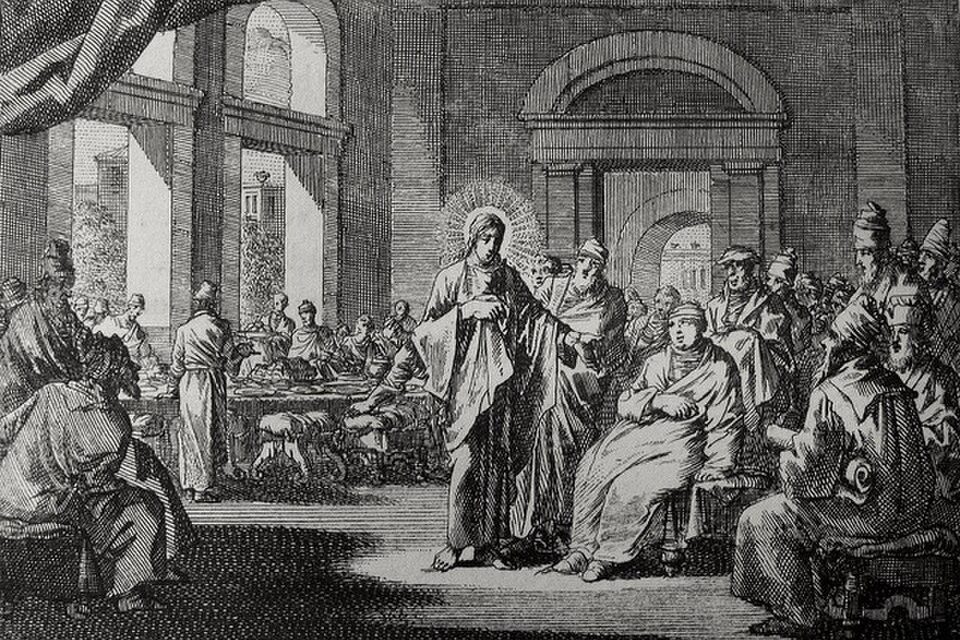
Luke says so explicitly: he has gone to dine at the home of a leading Pharisee, and the people there are observing him carefully. Then a man with dropsy appears - sick, in front of Jesus, in this room full of careful observers.
Jesus asks the lawyers and Pharisees a question before he does anything: "Is it lawful to heal on the sabbath or not?"
Silence.
He heals the man. He sends him away. Then he asks a second question: which of you, if your son or ox fell into a well on the sabbath, would not immediately pull him out?
More silence.
The lawyers and Pharisees have no answer to either question. Luke does not record one. What he records is the silence - twice - around a healing that happened in full view of people who were there specifically to find fault.
There is something almost serene about the way Jesus moves through this scene. He is not evading the scrutiny. He walked into a room full of it, asked a question that exposed the scrutiny for what it was, acted, and then asked another question that made the same point from a different angle. He is not defensive. He is not apologetic. He is simply doing what he came to do, and inviting the room to say something about it if they can.
They cannot.
Paul, opening his letter to the Philippians, is confident in a way that rhymes with this. "I am confident of this, that the one who began a good work in you will continue to complete it until the day of Christ Jesus." He is writing from prison, to a community he loves, about a work that is not his to complete - it is God's. The work God started in them will be finished. Paul doesn't have to manage that outcome. He prays for them, holds them in his heart, and trusts the one who began it.
The man with dropsy did not argue for his healing. He was simply present, in a room where Jesus was. And Jesus, asked whether it was lawful, acted without waiting for the room to grant permission.
This is the shape of how God works in a life. He began something. He will complete it. The completion does not depend on the silence of critics being broken, or on anyone in the room finding an answer to the question. It proceeds - through sabbath dinners, through prison cells, through rooms full of careful observers - because the one who began it is not waiting for permission either.
Paul prays that their love will abound more and more in knowledge and discernment. Not sentiment. Not feeling. Knowledge and discernment - so that they can tell the difference between what matters and what doesn't, so that they arrive at the day of Christ pure and blameless, filled with the fruit of righteousness.
That is the good work being completed. Not without cost or scrutiny. But without the scrutiny having the final word.
Comments
Sign in to leave a comment.