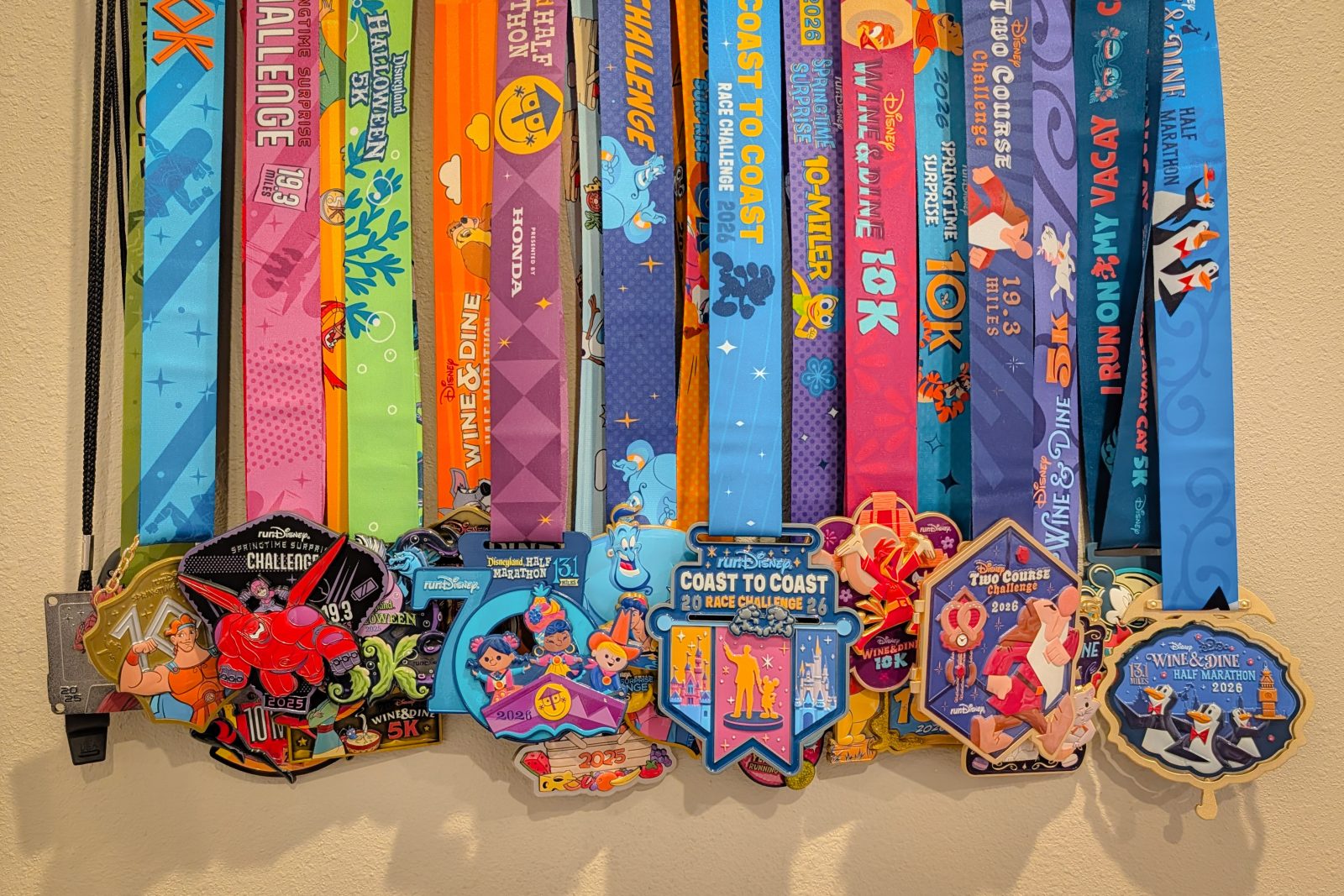
Last Sunday, I ran a half marathon at Walt Disney World with my son Thomas.
A full 13.1 miles through the parks and roadways, starting at about 5 AM, finishing as the sun came up over EPCOT. It was the third race of the weekend - we'd already done a 5K on Friday and a 10K on Saturday. My legs were tired. My training had been inadequate. But we were doing it.
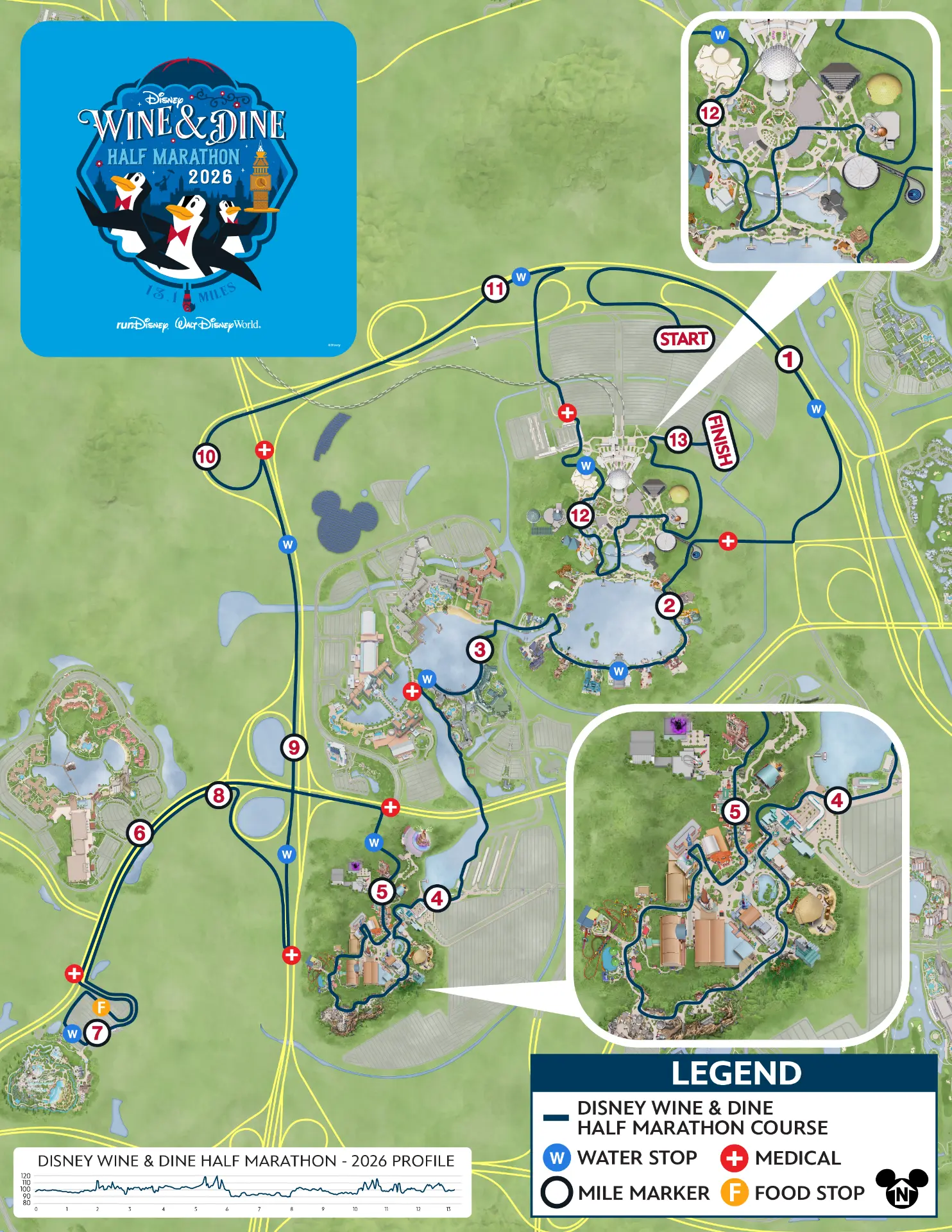
From about miles 5-7, the course takes you out of Hollywood Studios, along a roadway toward Blizzard Beach - one of Disney's water parks. You run down one side of the road, into the Blizzard Beach parking lot, make a loop around the perimeter to hit mile 7, then come back out and run down the other side of the road you came in on. (Note: Map at the bottom of this post.)
The result is race traffic going both directions - people heading into the parking lot loop on one side, people coming back out on the other.
As I was running toward the loop, I had a thought: How easy it would be to just cut across.
Skip the parking lot. Join the traffic going the other direction. Shave off a mile or so. No one would know.
The Temptation
I didn't want to, for the record. I wanted to finish what I'd started - honestly.
But the thought was there that it was possible to do, and that other people could consider it too.
Sometimes I like to think that the course designers know exactly what they were doing. They created a section where the shortcut was obvious, where the enforcement was invisible, and where the reward was the same either way. You'd still get the medal and the finisher photo. You'd still cross the line with everyone else.
The only difference would be what you knew about yourself.
runDisney has tracking mats throughout the course - there's a chip in your bib, and if you skip a section, the system catches it. Your results get flagged. Sometimes you're disqualified and it could affect future participation. But still, I don't think the real question is whether you'll get caught.
The real question is whether you're the kind of person who needs the threat of getting caught to do the right thing.
What Thomas Saw
Here's the thing: Thomas was running behind me. And he saw a small group of people do exactly what I'd imagined. They turned around early, cut across the road, and cheated.
We talked about it later - how disappointing it was to see. And what you'd think of yourself if you did it.
You'd have the medal. But every time you looked at it, you'd know. You didn't run the whole course.
There's a concept in ethics called the "ring of Gyges." It comes from Plato. A shepherd finds a ring that makes him invisible, and the question is: what would you do if you knew you couldn't get caught? Would you still be honest? Would you still be just?
The parking lot loop was a ring of Gyges. Not literally invisible - but practically. Honestly, it's bad enough that people around who who were also running the whole thing saw you do it. But still - at that moment there were no officials and no cameras. Just you and your conscience and the choice.
Why We Cheat (Or Don't)
Dan Ariely, the behavioral economist, has spent years studying dishonesty. His research reveals something uncomfortable: most people cheat - but only a little. We have what he calls a "personal fudge factor." We'll bend the rules enough to benefit ourselves while still maintaining the story that we're basically honest people.
In one famous experiment, participants could inflate their scores on a test and earn more money. Most people cheated. But they didn't cheat as much as they could have. They cheated just enough to feel like they'd gotten something extra, but not so much that they had to revise their self-image.
The interesting finding is that cheating isn't primarily about the reward. It's about identity. We cheat up to the point where we'd have to admit to ourselves that we're cheaters - and then we stop.
Which means the question isn't really "will I get caught?" The question is "who do I want to be?"
The Cost of Shortcuts
There's a moment in C.S. Lewis's Mere Christianity where he talks about the difference between doing the right thing and being the right kind of person. He writes:
"Every time you make a choice you are turning the central part of you, the part of you that chooses, into something a little different from what it was before."
That's the real cost of the shortcut. Not the medal - who cares about a finisher medal? The cost is what happens to the chooser.
Every decision is practice. Every choice is a repetition that makes the next choice more likely. Cut the course once, and you've practiced cutting corners. You've made it marginally easier to do it again. You've become, in some tiny way, a person who takes shortcuts when the stakes are low and the enforcement is absent.
Lewis again:
"Good and evil both increase at compound interest. That is why the little decisions you and I make every day are of such infinite importance."
The half marathon didn't matter. Not really. It was a Disney race - a fun run with a TON of walkers (myself being one of them for a lot of the Half). The stakes were absurdly low. But that's precisely what made it a test. Because character isn't built in the moments when the stakes are high and everyone is watching. Character is built in the moments when no one would know.
Integrity as Practice
The word "integrity" comes from the Latin integer - meaning whole, complete, undivided. A person of integrity is someone whose inner life and outer life match. Someone who is the same person in private that they are in public. Someone who doesn't have to manage multiple versions of themselves because they're running on one consistent operating system.
That's harder than it sounds. We all have moments where we're tempted to be one person when watched and another person when alone. To perform virtue for an audience and relax into convenience when the audience leaves.
The parking lot loop was a test of integrity in the literal sense: would I remain whole? Would the version of me on that road match the version of me at the finish line?
What the Medal Means
Thomas and I finished that race. Honestly. Every mile - including the parking lot loop that no one would have known we skipped.
And here's the thing: the satisfaction at the finish line was real. Not because of the medal - the medal is plastic and ribbon, and I have a drawer full of them. The satisfaction was real because I knew what I did to get it.
Paul Bloom, the Yale psychologist, wrote a book called The Sweet Spot about why humans willingly take on difficulty. His thesis: we value what we've earned. Struggle creates ownership. Difficulty makes the reward meaningful.
The shortcut would have given me the same medal but stolen the meaning. I would have crossed the line knowing I was wearing a prize I didn't earn. And every time I looked at it, that knowledge would be there.
There's a phrase runners use: "the race doesn't lie." Your time is your time. The distance is the distance. You can tell yourself any story you want, but the course knows the truth.
So do you.
The Way We Do Anything
The Franciscan friar Richard Rohr wrote, "The way we do anything is the way we do everything."
It sounds like an exaggeration, but I don't think it is. The habits we build in small things show up in big things. The shortcuts we take when the stakes are low become the shortcuts we take when the stakes are high. The integrity we practice in the invisible moments becomes the integrity we have access to in the visible ones.
How you run a half marathon is how you run your business. How you respond when no one's watching is how you'll respond when everyone is. The version of yourself you practice in the parking lot loop is the version of yourself you'll have available when it matters.
Aristotle said we become what we repeatedly do. He was talking about virtue - the idea that courage, honesty, and justice aren't feelings or opinions but habits. You don't feel your way into being a person of integrity. You practice your way there. One small decision at a time. One parking lot loop at a time.
The Person at the Finish Line
I think about Thomas seeing those people cut the course. I think about what that moment taught him - not from anything I said, but from what he witnessed.
He's a grown 21-year-old now. But he's still my kid, and kids learn more from what they see than from what they're told. If he'd seen me cut across, no lecture about integrity would have undone that. He would have learned that integrity is something you talk about but not something you do when it costs you.
Instead, he saw people cheat - and he mentioned that it bothered him, and he saw that it bothered me. He saw that I thought less of them for it. And he saw that I didn't do it myself, even though I could have. Even though the stakes were low. Even though the only witness was him.
I don't know what he took from that moment. But I know what I wanted to model: that the kind of person you are matters more than the finish time. That integrity isn't about getting caught. That running the whole course is worth something, even when no one's checking.
The Course Ahead
We all have parking lot loops - moments when the shortcut is obvious, the enforcement is absent, and the reward looks the same either way.
Expense reports. Promises made in private. The thing you said you'd do that no one will notice if you don't. The extra effort that doesn't show up on any scorecard. The honesty that costs you something.
The temptation in all of them is the same: no one will know.
But you'll know. And over time, what you know about yourself becomes who you are.
The research backs this up. The philosophy backs this up. The wisdom traditions back this up. But you don't need research or philosophy or wisdom traditions to know it's true. You can feel it in your gut the moment after you've taken a shortcut. That slight hollowness. That sense that you got something you didn't earn.
The medal doesn't mean anything if you didn't run the course.
Run the whole loop.
Not because anyone's watching. Not because you'll get caught. Not because someone's keeping score.
Run it because of who you become when you do.
When's the last time you were tempted to cut the course - and what did you do? Reply or leave a comment.
Sources:
- Dan Ariely, The Honest Truth About Dishonesty - research on the "personal fudge factor" and why we cheat
- C.S. Lewis, Mere Christianity - on how every choice shapes the chooser
- Paul Bloom, The Sweet Spot - on why struggle creates meaning
- Richard Rohr - "The way we do anything is the way we do everything"
- Plato, Republic - the ring of Gyges thought experiment
Comments
Sign in to leave a comment.