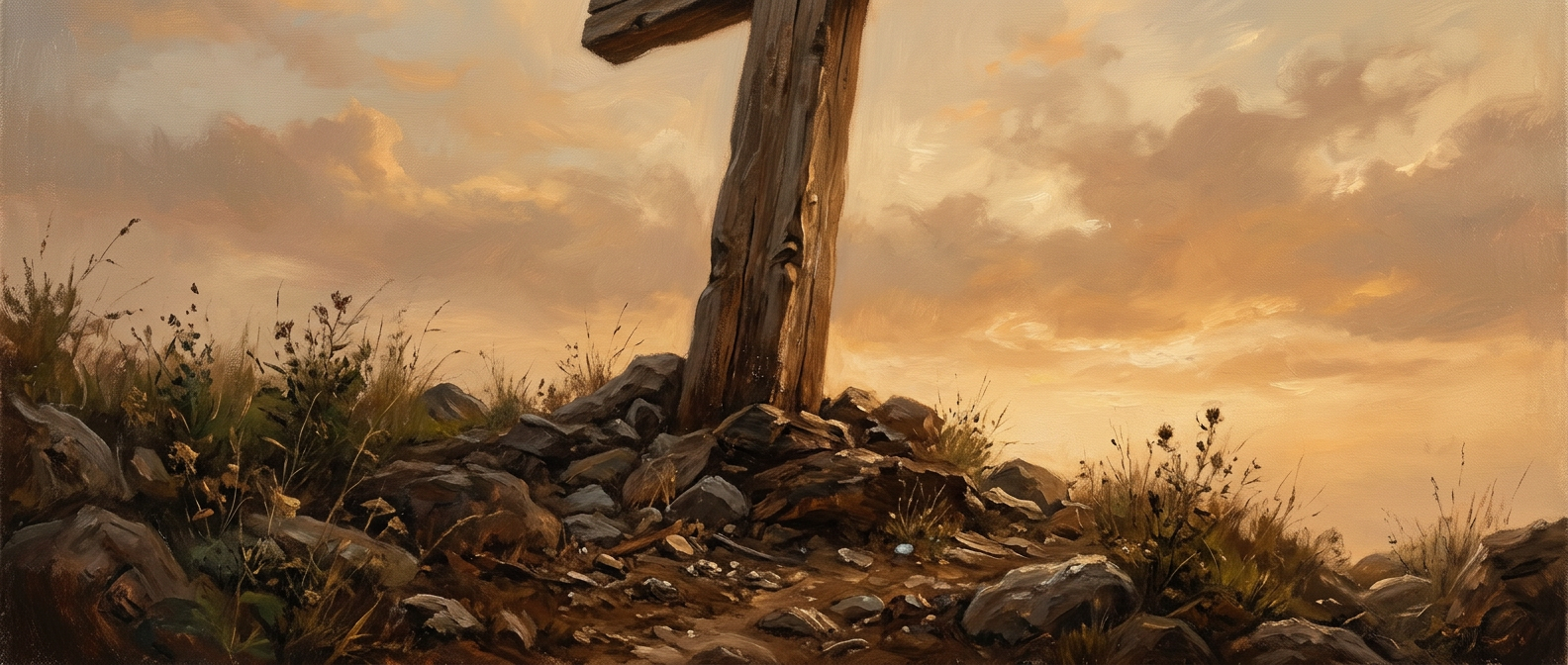
Today's memorial concludes Our Lady's thirty days - liturgically from the Assumption on August 15, through her birth a week ago, to her sorrows today. It lands on a somber note, rooted in the seven sorrows we've carried with her through the month.
Something happened in prayer this morning that I've been holding in my heart. It ties to something that happened at Mass this past Sunday. I'm still working it out, but I think it's meant to be shared.
One of the blessings and curses of my life as a deacon is the years I spent before ordination as a parish music director, musician, and organist.
I evolved over those years. I started as a "Spirit and Song" director - contemporary Catholic music, guitars, the whole catalog. But my pastor and parish sent me to chant and polyphony workshops and gave me deeper encouragement and formation, and as I learned more about the history and evolution of the liturgy, I grew into a much more traditional-leaning liturgical musician.
I'm grateful for that formation. It gave me ears to hear what the Church desires in her worship. But it also gave me ears to hear what's missing. And once you hear it, you can't unhear it.
OCD and anxiety run in my family - all around me. By the grace of God, I've been able to largely self-manage mine. But one of the areas where I know it shows up most - and where I have to keep it most in check - is a focus on precision in the liturgy.
It helps and hurts that I serve a pastor who truly desires to do everything as the Church intends, to use the first and best option the Church gives us for everything, but who genuinely strives to integrate the desires of everyone he hears from in the parish too.
The one area where what the Church intends - and her first and best option - typically doesn't happen in normal American parish life is in the music. It's uniquely the result of the development of music around the Mass in the United States since the Second Vatican Council.
At times, I find that the music at many Masses in many places can be dreadfully trite, even profane; very far from the first and best option the Church gives us. Words that focus on "we... we... we" when we should be focused on Him. Rhythms and instrumentation that belong at a concert, not a sacrifice. There are times when the music makes me feel that I'm at a bar, or a Broadway musical, or Disney World, and you know how much I love those places (well, maybe not bars as much), but I shouldn't feel that way at Holy Mass.
It weighs on me. More than it should, probably. But I can't make myself not care about it.
Understanding this - having faced it himself - my spiritual director gave me a tool years ago.
When I'm feeling the weight of the sorrow of the liturgy not being what the Church desires in its fullness, I am to unite my feelings to Mary at the foot of the cross.
As she stood and watched her Son suffer in those moments, I as a minister of the Church stand and watch her Son continue to suffer in His body today.
I've found it ironic - or providential - that in the parish where I serve, the crucifix in the sanctuary is placed slightly off-center. When we stand facing the sanctuary at the conclusion of Mass, waiting to genuflect and process out, I'm aligned directly with the crucifix.
At times when the music of the recessional is dreadfully profane - words focused on "we... we... we", supplemented by drums, tambourines, or clapping - I look directly up at Jesus on the cross and unite myself with Mary in the way my spiritual director suggested. He's literally on the cross right in front of me.
There were times before and during my sabbatical when I prayed: "How long must a person stay there united with Mary in her sorrow?"
How long do I have to watch this? How long do I have to stand here and feel it and not be able to fix it? It played deeply into my soul-searching so deeply that I asked whether I should have been ordained a deacon at all.
And the answer that came to me - in the silence of prayer, and from spiritual directors and my superiors - was always something like:
"Stay until the end."
Not until it gets better. Not until you figure out how to change it. Not until you earn the authority to make it right.
Until the end.
Something happened this past Sunday at the 8:00 Mass that I wasn't expecting.
When I, as deacon, asked the priest for his blessing before I proclaimed the Holy Gospel - as he blessed me - I felt the deepest sense of peace in my ordained identity as an Icon of Christ the Servant.
What hit me was this: I was DEACON Michael, not Deacon MICHAEL.
The emphasis matters. It matters more than I realized.
At times when I mess up the emphasis - when I tie the diaconal identity too close to my own identity - that God-given inclination to OCD can overtake the compassion and service that I can bring as Deacon. When it's Deacon MICHAEL, I'm the one striving, the one suffering, the one trying to fix what I can't fix. When it's DEACON Michael, I'm the icon. The servant. The one who stands at the right hand. The one who stands with Mary.
It's been an eye-opening few days. A feeling of peace that I haven't felt in years. A clarity I've been praying through since.
This morning's Office of Readings brought St. Bernard on this feast:
Truly, O blessed Mother, a sword has pierced your heart. For only by passing through your heart could the sword enter the flesh of your Son. Indeed, after your Jesus - who belongs to everyone, but is especially yours - gave up his life, the cruel spear, which was not withheld from his lifeless body, tore open his side. Clearly it did not touch his soul and could not harm him, but it did pierce your heart. For surely his soul was no longer there, but yours could not be torn away.
Hers could not be torn away. She stayed. She stood. She let the sword pass through.
And then Bernard writes this, which stopped me cold:
What an exchange! John is given to you in place of Jesus, the servant in place of the Lord, the disciple in place of the master; the son of Zebedee replaces the Son of God, a mere man replaces God himself. How could these words not pierce your most loving heart, when the mere remembrance of them breaks ours, hearts of iron and stone though they are!
The servant in place of the Lord.
That's what ordination did. I was given in place of Jesus - not as Jesus, but as icon. Servant. The one who stands at the right hand. The one who stands with Mary.
Not to fix it. Not to control it. To stand there. To suffer with. To stay until the end.
Bernard continues:
Do not be surprised, brothers, that Mary is said to be a martyr in spirit. Let him be surprised who does not remember the words of Paul, that one of the greatest crimes of the Gentiles was that they were without love. That was far from the heart of Mary; let it be far from her servants.
Let it be far from her servants. That's me. That's what I'm called to. Not a heart without love - hardened, critical, counting the failures - but a heart like hers. Pierced, but present. Sorrowful, but staying.
Morning Prayer brought Colossians:
Even now I find my joy in the suffering I endure for you. In my own flesh I fill up what is lacking in the sufferings of Christ for the sake of his body, the church. I became a minister of this church through the commission God gave me to preach among you his word in its fullness.
I fill up what is lacking. I became a minister through a commission.
This is what it means to stand with her. Not to escape the sorrow, but to fill it up. To let the suffering do its work in me - forming me, emptying me, making me less MICHAEL and more DEACON. The commission wasn't to fix the Church. The commission was to preach the Word in its fullness - and to fill up, in my own flesh and service, what is lacking in Christ's sufferings for the sake of his body.
That's what standing with Mary looks like. Not standing apart, critiquing. Standing with, suffering with. The Latin word is compassio - to suffer together.
The Stabat Mater, the sequence for today's Mass, prays:
At the cross her station keeping, Stood the mournful Mother weeping, Close to Jesus to the last.
Close to Jesus to the last. Not until it got easier or until the music improved. To the last.
Make me feel as you have felt; Make my soul to glow and melt With the love of Christ, my Lord.
Holy Mother, pierce me through, In my heart each wound renew Of my Savior crucified.
I have spent years asking to be spared the piercing. Asking how long I must stand there. Asking when the sorrow would lift.
The answer, it turns out, is not relief. It's transformation.
DEACON Michael can stand there. Deacon MICHAEL cannot.
The one who knows he's an icon can bear it. The one who thinks it's about him will be crushed by it.
The antiphon from the Canticle at Morning Prayer:
Rejoice, O sorrowful Mother; after your great sufferings, you shine forth as Queen, enthroned beside your Son.
After the sufferings. After the standing. After the sword.
Not instead of. After - comes the rejoicing and shining forth.
The Collect for today's Mass:
O God,
who willed that,
when your Son was lifted high on the Cross,
his Mother should stand close by and share his suffering,
grant that your Church,
participating with the Virgin Mary in the Passion of Christ,
may merit a share in his Resurrection.
Participating with her, sharing his suffering, standing close by.
Until the end.
And then - only then - a share in his Resurrection.
I don't know how long I'll be standing there. I don't know when or if the music will change in the places where I'm sent to serve. I don't know if the sorrow will lift in this life.
But I know what happened this past Sunday. I know the peace I felt when I stopped being Deacon MICHAEL and became DEACON Michael.
And I know who's standing with me.
She never left.
And - PS - when the sorrow is too deep, there is always the consolation of the weekends when I'm "off" and I'm able to go with my sons, who also prefer the more reverent, to Holy Mass at other churches around us that are continuing to grow more reverent in their liturgies. I can serve and be filled by God's Holy Church. Thanks be to God for that gift!
Comments
Sign in to leave a comment.