I left the laptop at home.
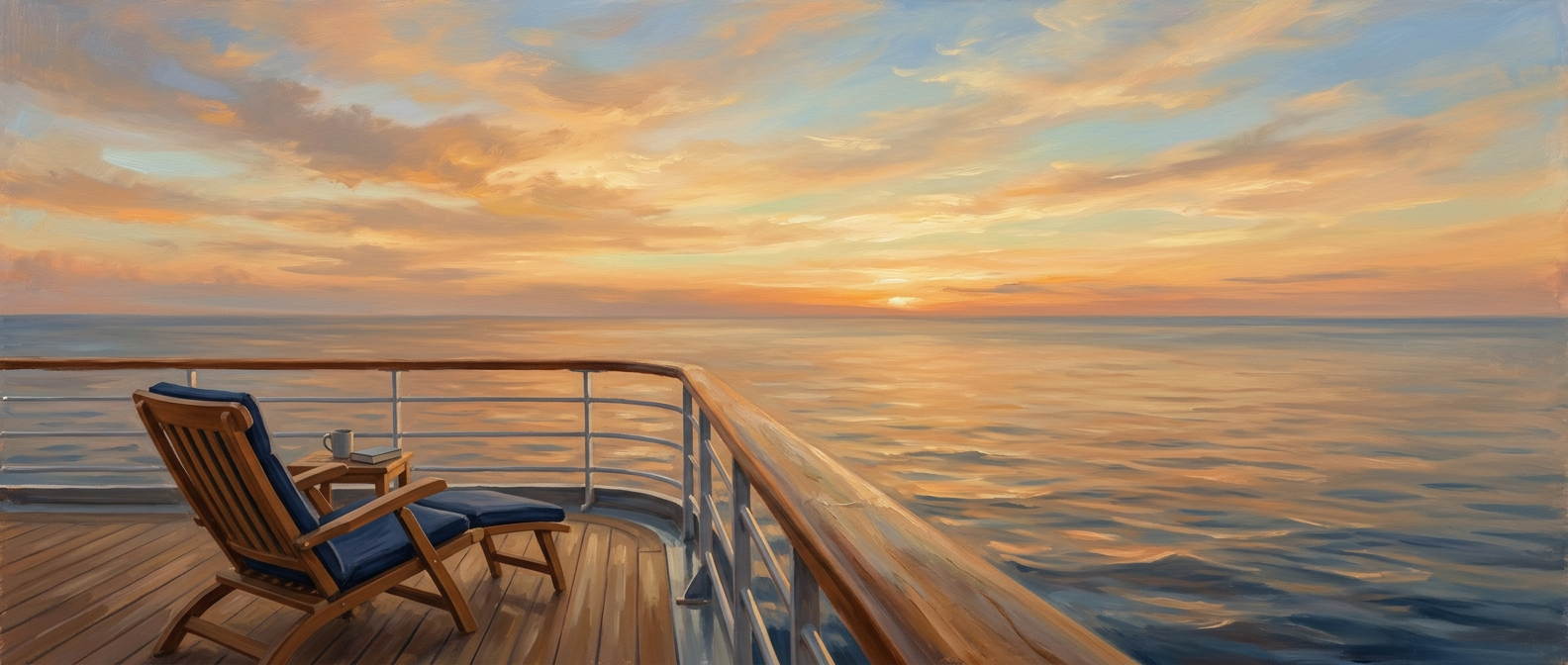
For the first time I can remember, I went on vacation without it. No work email. No documents to review. No "just in case" weight in my bag. Just a phone for photos, a Kindle for reading, and almost a week at sea with my family.
It was wonderful.
I had prepared everything in advance - content scheduled, systems set, nothing urgent waiting. So when we boarded the ship on May 28th, I wasn't leaving chaos behind. I was leaving motion behind. And that made all the difference.
No phantom reaching for the bag where the laptop usually lives. No anxiety about what I might be missing. Just freedom. Beaches. Rest. The strange joy of an entire family - plus our traveling companion, Father Arisman - all being offline together.
We've talked about that a few times since we got back. How rare it is, how good it felt, and how we want more of it.
Rest feels different when you own the outcome.
At Adobe and previous employers, even on vacation, there was always a layer of accountability that wasn't mine to control. Someone else's expectations. Someone else's timeline. Someone else holding ownership over the results. I could step away, but I couldn't fully release.
Now the rise and fall of the work is mine. Domus is mine (to steward, for God, to whom it truly belongs). The mission is mine. And that changes everything - including how I rest.
When you own it, you can actually set it down. You're not waiting for someone else to give you permission to stop. You're not worried about what's being decided without you. You prepared, you released, you rested. And the work was still there when you got back - not because someone else preserved it, but because you built it to hold.
That's a different kind of freedom.
But re-entry was harder than I expected.
Not the desire to return - I was ready. Not the approach - I knew what I was coming back to. But the reconnecting. I had disconnected so well that I couldn't immediately remember what was in motion, what needed attention, what came next.
That's a strange problem to have. Usually the issue is that you can't stop thinking about work. This time the issue was that I had actually stopped - and picking the threads back up took longer than I thought.
It was energizing, though. Different from returning to Adobe. When it's yours, the re-entry isn't dread, it's ownership. It's "this is mine to build, mine to steward, mine to offer."
And yes, heavier too, precisely because it's entirely my responsibility. Because no one else is going to carry it. Because the mission is real: Seek first the kingdom. That's not a slogan. That's the weight I've chosen.
We're in Ordinary Time now.
The Church moved from Easter to Pentecost, to Ordinary Time, and now the green vestments are back - the long stretch of Sundays between Pentecost and Advent. People sometimes hear "ordinary" and think it means unremarkable. But that's not what it means.
The word comes from ordinal - as in ordered, counted. Ordinary Time is counted time, measured time. The Sundays are numbered: the Second Sunday, the Third Sunday, the Tenth Sunday, all the way to Christ the King.
It's time that's been ordered.
And that's the invitation, isn't it? Not to endure the ordinary as if it were less than the feasts, but to rightly order our days. To count them. To approach our work - and our rest - in a measured way, trusting that the number of our days has already been ordained by the One who holds all things.
The psalmist prays: Teach us to number our days, that we may gain a heart of wisdom.
That's Ordinary Time. That's the work ahead. Not spectacular, not dramatic - just the daily ordering of a life toward God.
I'm back at it now. The threads are picked up, the rhythm is returning.
But I'm trying to hold onto something from that week at sea: the freedom that comes from preparing well and then actually letting go. The rest that's possible when you own the outcome. The joy of a family offline together, present to each other, not pulled in six directions.
Ordinary Time. Ordered days. Counted, numbered, ordained.
Here we go.
Comments
Sign in to leave a comment.