Why a 47-year-old deacon keeps coming back to Disney - and what it has to do with your soul
There's a moment at Disneyland that gets me every time.
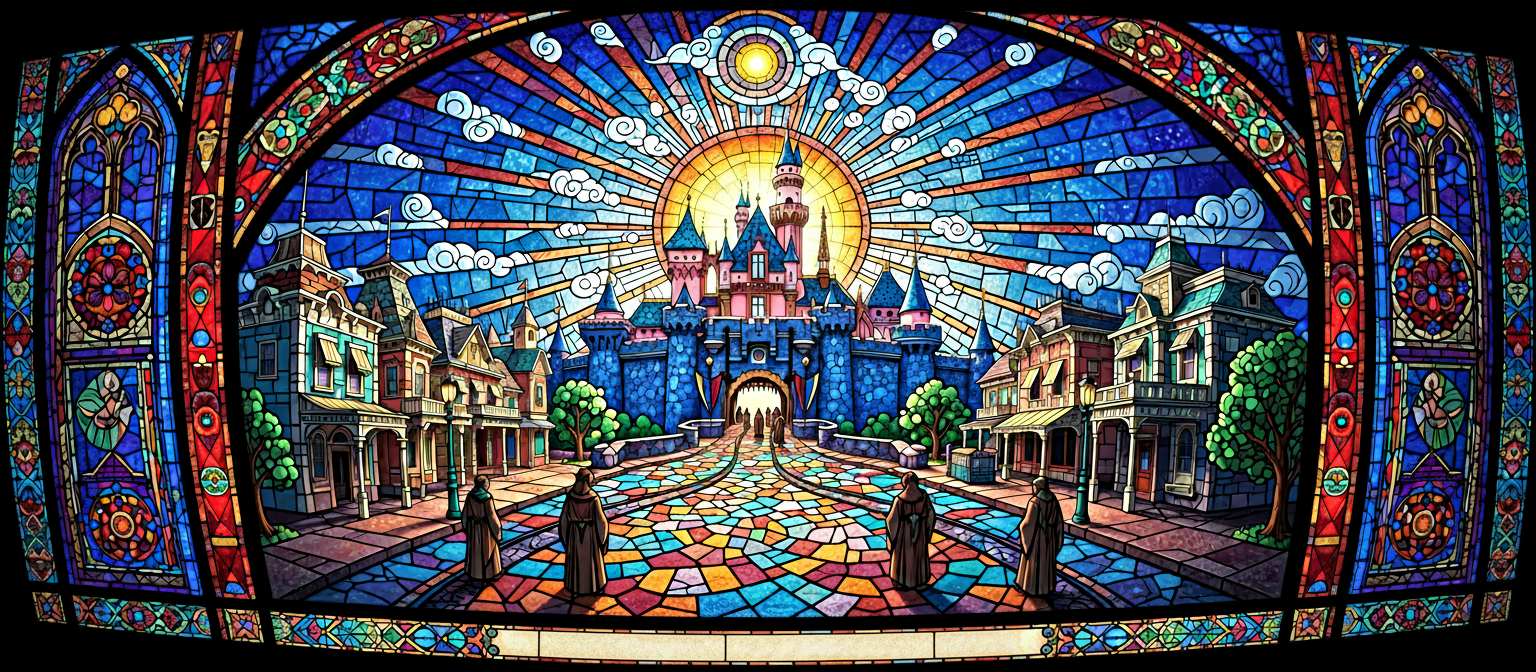
You walk through the tunnel beneath the train station, the sounds of the outside world fading behind you. And then you emerge onto Main Street, U.S.A., and the world opens. The castle rises in the distance. The music swells. Something in you shifts.
I've made this walk dozens of times - here at Disneyland, at its parallel at Magic Kingdom at Walt Disney World. I'll make it again this week, alone this time, while my family enjoys other adventures. And I've been asking myself lately: Why does this still move me? What is it about this place that keeps pulling me back - not as escape, but as something deeper? As a grown man, no less.
The answer, I've realized, has everything to do with thresholds. And creativity. And a couple of men who shaped me long before I ever set foot in Anaheim.
The Men Who Built Worlds
Before I had really come to understand and appreciate Walt Disney, his name, and his work, two men were already teaching me what he understood instinctively. Both worked within the same canvas - Scouting's Order of the Arrow - but they shaped me in different ways.
Jim Dedera built worlds in firelight. As an adviser, his medium was camp programs, campfires, and night hikes that always told a story. Every element served the message. Every moment gathered us - a small band of young men finding our way - around something true. Jim taught me that creativity isn't about the creator; it's about what happens in the people who receive it. The right story, told the right way, focuses everyone on a single truth that unites them.
Bruce Sanders worked on a larger stage - literally. He led productions at national Scouting events: half-million dollar shows in university arenas, thousands of Scouts watching. And one day, Bruce handed me a blank script and said, "You write it this year. You tell the story this time around." He didn't just inspire me to appreciate narrative; he made me a companion storyteller, responsible for shaping what those thousands would experience.
Jim formed me in the intimate. Bruce trusted me with the expansive. Both were doing exactly what Walt Disney did - building spaces and experiences that invited people to encounter something true about themselves and the world.
They were my Walts before I knew what a Walt was.
Finding God in All Things - Even a Theme Park
St. Ignatius of Loyola taught his followers to "find God in all things." It's a radical idea: that the sacred isn't confined to churches and prayer books, that the Divine is woven through ordinary life, waiting to be noticed.
Ignatius was also a walker. He walked across Europe, and his journeys became spaces for encounter - with others, with himself, with God. The movement itself opened something.
I think about this when I walk through Disneyland.
Each land is a threshold. You don't just enter Adventureland or Fantasyland or Galaxy's Edge - you cross over. The architecture, the music, the details underfoot and overhead - all of it is designed to invite you somewhere. To awaken something.
This isn't just entertainment. It's something closer to what Ignatius called consolation - that movement of the soul toward life, hope, and God. The best creative work, whether it's a well-crafted homily or a Disney attraction that takes your breath away, creates conditions for consolation. It invites people into encounter.
Walt wasn't a theologian. But he understood something theological: humans need wonder to become fully alive.
Walking Through the Lands
This week, I'll walk Disneyland alone. Not to escape, but to pay attention. To let the journey become a kind of retreat.
Main Street is where it begins - that tunnel, that emergence, that opening. It's the call to adventure in physical form. Ignatius would recognize it: the moment when the soul says yes to something larger than the daily routine.
Adventureland invites exploration. The unknown beckons. There's risk here, but also discovery. This is the land of the first movements of discernment - What draws me? What am I curious about? Where is energy rising?
New Orleans Square offers depth and beauty in unexpected places - jazz drifting from hidden corners, the Haunted Mansion's playful dance with mortality. Here, perhaps, we confront what we usually avoid, but with enough whimsy to make it bearable.
Fantasyland is where we remember that we were children once, and that faith asks us to become like children again. Not naive, but open. Willing to believe in things we cannot see.
Tomorrowland points forward. Hope lives here - the conviction that the future can be better than the past, that human creativity and courage can build something good. It's eschatology in fiberglass and steel.
Galaxy's Edge is the newest land, and maybe the most immersive. You don't just visit; you become part of the story. It asks: Who are you in this narrative? What role will you play? Ignatius asked the same questions in his Spiritual Exercises, inviting retreatants to place themselves inside the Gospel stories.
Each land, a different invitation. Each threshold, a chance to notice what stirs in me.
The Seeds God Plants
Here's what I've come to understand: my attraction to Disney isn't about nostalgia or escape. It's about recognition.
I recognize what Disney is doing because Bruce and Jim did it for me first. They built worlds. They created thresholds. They used creativity not for self-expression but for invitation - to help me encounter who I was made to be.
Jim formed me in the intimate. Bruce trusted me with the expansive.
And then God gave me a companion for the journey.
Friends in the Lord
Ignatius of Loyola never walked alone. From the very beginning, he gathered what he called "friends in the Lord" - companions who shared the vision, sharpened each other's discernment, and held one another accountable to the call. The early Jesuits prayed together, traveled together, and built together. They understood that vocation isn't a solo project.
I met Jacob a few years ago when we were working together at Exodus, a men's ministry focused on freedom and authentic masculinity. Jacob tells stories for a living. He owns and runs 86 Creative, an agency that serves the Church and large Catholic ministries. He builds worlds - not with campfires or arena shows, but with film and design and the careful craft of visual narrative.
Jacob is a Walt too. He knows it. We've talked about it.
What makes Jacob different from Jim and Bruce is that he's not a mentor - he's a peer. We're walking the same path, asking the same questions, drawn to the same mystery of why creativity matters and what it's for. He's my contemporary companion in this creative vocation.
Together, we built a threshold once. The Exodus Summit brought about 150 men to the mountains of Colorado for a long weekend - part retreat, part adventure, part discernment. We created a space where men could encounter something true about themselves and God. It was the only Summit of its kind. And in the planning, the execution, the late nights figuring out how to make it work - I recognized what we were doing. We were being Walts. We were being Bruces and Jims. We were building a world for others to enter.
Jacob has been in the parks with me too. Last April, he ran the 5K at Springtime Surprise with my son Andrew and me. There's something about running through Disney before dawn, the park empty, the familiar landmarks lit against the dark sky - it strips away the irony and leaves only the wonder. And to share that with a friend who gets it, who sees what you see - that's companionship in the fullest sense.
Ignatius would recognize it. Friends in the Lord, running toward the same horizon.
The Walking Examen
One of Ignatius's most enduring gifts to the Church is the Daily Examen - a simple practice of reviewing each day with intention. Where did I feel most alive today? Where did I feel drained? Where was God present? Where did I miss Him?
It's a practice of attention. Of noticing what stirs.
(A side note: Jacob and I share a mutual friend - another Walt in his own right - named Mark Q. Mark created Pray On Paper, a company that sells beautifully bound journals designed to guide the faithful through a nightly Examen and give them space to journal it over time. It's threshold-building in a different form - a physical invitation to the discipline of noticing. The Walts, it seems, keep finding each other.)
I've realized that walking through Disneyland - really walking, with intention - is a kind of Examen in motion.
Where does consolation rise? Consolation, in Ignatian terms, is that movement of the soul toward life, hope, and God. It's the warmth that tells you something is right, something is true, something is drawing you closer to who you're meant to be. When I round the corner and see the Matterhorn against the California sky, something in me lifts. When the music swells on Main Street, something settles. These aren't just pleasant feelings - they're data. They're invitations to pay attention.
Where does desolation creep in? Desolation is the opposite movement - the pull toward isolation, anxiety, emptiness. It's subtler at Disneyland, but it's there. The moments when the crowds feel suffocating instead of festive. The creeping sense of is this all there is? when the magic doesn't land. These moments matter too. They're telling me something about what my soul needs - and doesn't need.
Where is God? This is the real question. And the answer Ignatius gives is: everywhere, if you have eyes to see. In the craftsmanship of a hand-painted sign. In the laughter of a child meeting Mickey for the first time. In the quiet corner of New Orleans Square where the jazz drifts and the world slows down. In the friend who runs beside you in the dark.
Finding God in all things isn't a pious platitude. It's a discipline. It requires slowing down enough to notice, asking the questions that reveal what's actually happening in your soul.
The Magis
There's one more Ignatian concept that haunts me lately: magis.
It's often translated as "the more" - and it's been misunderstood as a kind of spiritual ambition, always striving, never satisfied. But that's not what Ignatius meant.
Magis is about depth, not volume. It's the question: What is the fuller, truer, more authentic expression of what God is calling forth in me? It's not about doing more things. It's about becoming more fully who you were created to be.
I'm in the second half of life now. The questions are different here. It's less about what should I accomplish? and more about who am I becoming? Less about building a career and more about building a legacy of presence, of invitation, of thresholds that help others encounter God.
Walt Disney died at 65, his vision still expanding. He never stopped asking what's next? - not out of restlessness, but out of that magis instinct. There was always more wonder to create, more thresholds to build, more people to invite into encounter.
Jim and Bruce planted seeds in me decades ago. Jacob walks alongside me now, a fellow pilgrim asking the same questions. And somewhere ahead, there are thresholds I'm meant to build - spaces where others can cross over into wonder, into truth, into the fullness of who God made them to be.
That's the magis of the second half. Not more activity. More faithfulness to the invitation.
An Invitation
If you've read this far, you might be asking your own questions.
Who were the Walts in my life? Who built worlds for you, created thresholds, invited you into something larger than yourself?
Who walks alongside me now? Who are your friends in the Lord - the companions who see what you see and sharpen your sense of call?
What seeds were planted? What did those experiences awaken in you that might still be growing, still pushing toward the light?
Where is the magis? What is the fuller, truer, more authentic expression of what God is calling forth in you - not more activity, but more depth, more presence, more faithful threshold-building?
I'll be walking Main Street this week, practicing the Examen in motion, asking these questions alongside you. And maybe that's the point: we're all walking our own Main Streets, passing through our own tunnels, emerging into whatever adventure God has prepared.
The castle is always there in the distance. The music is always playing.
The only question is whether we'll notice.
Comments
Sign in to leave a comment.