Christ the King is my favorite feast.
I know that's an odd thing to say. Most people, if they have a favorite, pick something warmer - Christmas, Easter, maybe a saint they're devoted to. But Christ the King lands differently for me. It comes at the end of November, after All Saints and All Souls, after the readings have turned apocalyptic, after the trees have gone bare. The whole month has been pushing us toward the edge - toward death, judgment, the four last things.
And then, right before Advent resets the calendar, the Church says: He's got this.
Christ the King isn't triumphalist. It's reassuring. After a month of contemplating endings, we're reminded who's in charge of endings. The Alpha and the Omega. The one who was and is and is to come. Whatever chaos you've been watching in the news, whatever grief you've been carrying, whatever anxiety is keeping you up at night - he's got this.
That's always been the comfort of this feast for me.
This year, it is becoming something more.
The Organist
Earlier this year, I wrote a piece called "The Seeds That Form Us" about the men who shaped me - who saw something in me before I saw it myself and named it into existence. One of those men was Jim Dedera.
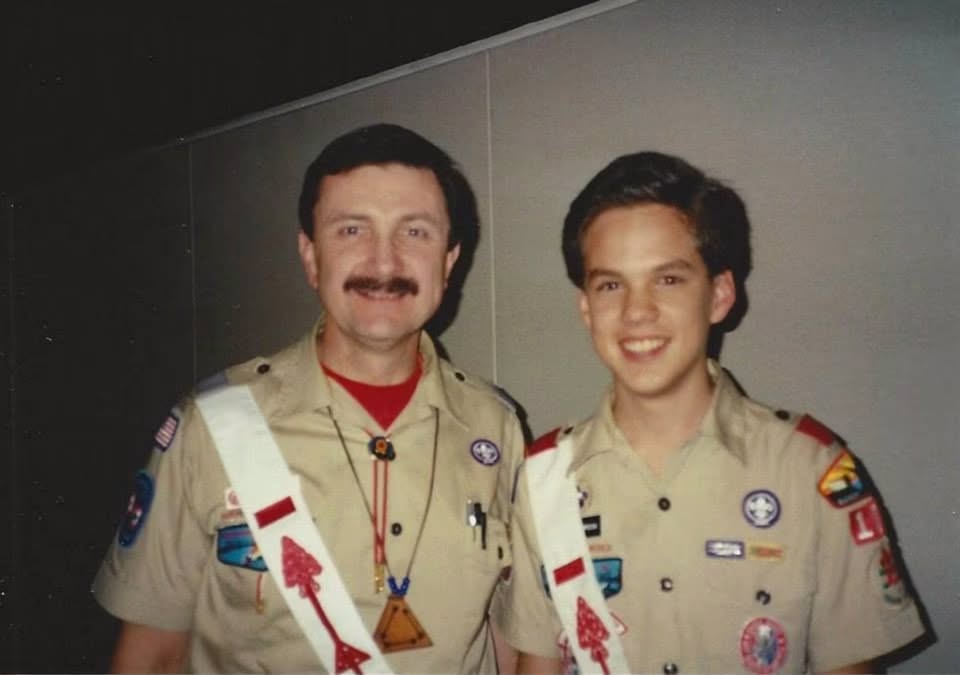
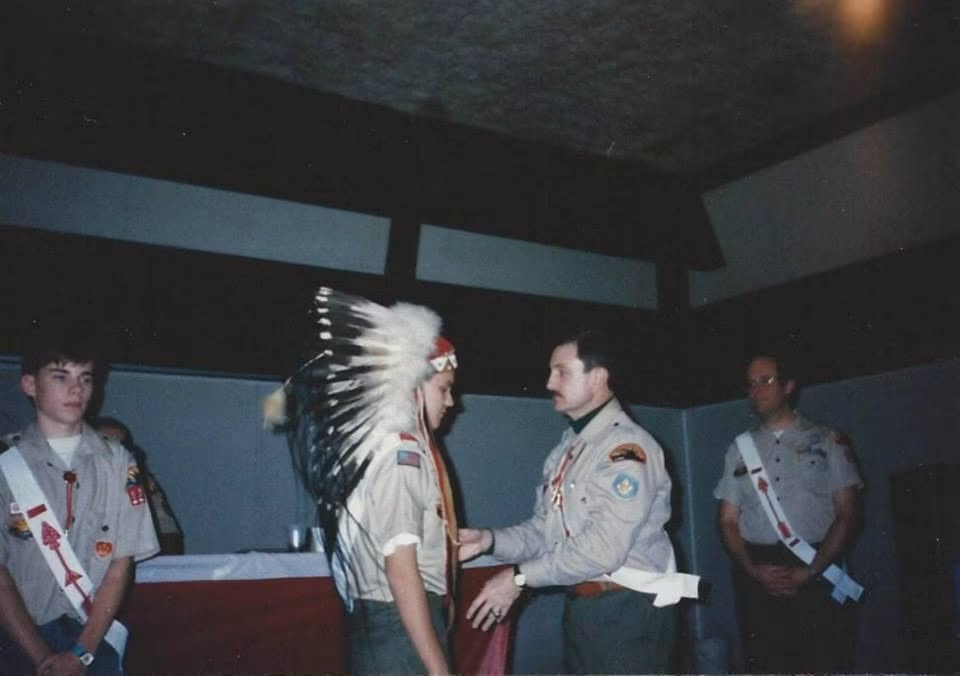
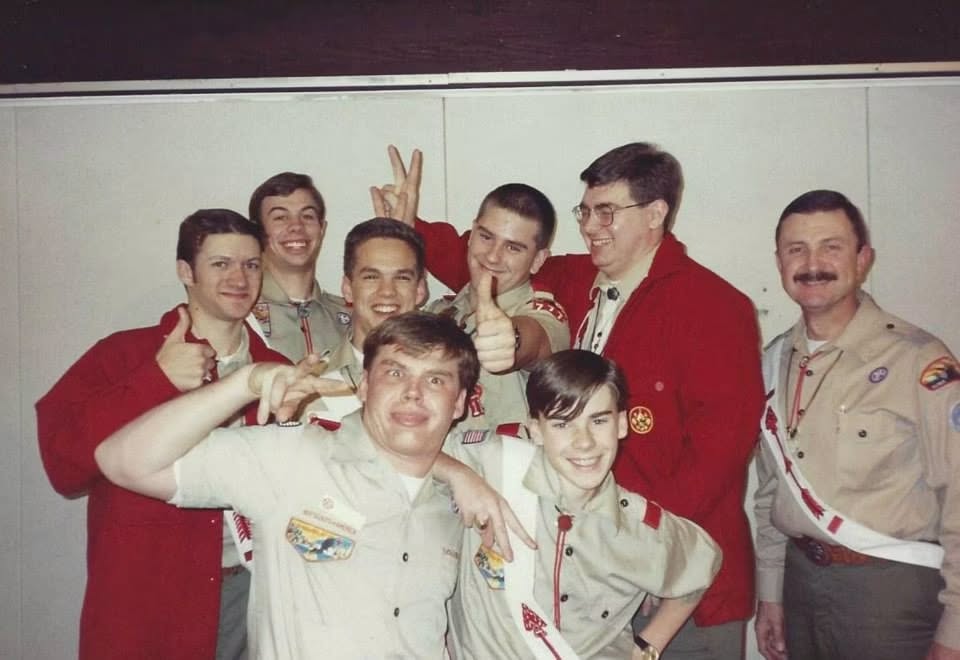
Jim was an Eagle Scout and longtime scouting leader. He was an organist who played at St. Elizabeth Parish in Granite City - my parish - for years. He was one of my mentors in both worlds. When I was young, he saw in me a capacity for service that I hadn't yet recognized. He couldn't have known it would lead to ordination, to youth ministry, to the work I do now. He just saw the seed and tended it.
Jim died thirteen years ago this week.
He died on the Tuesday after Christ the King, 2013. He was buried that Saturday - the last day of the liturgical year.
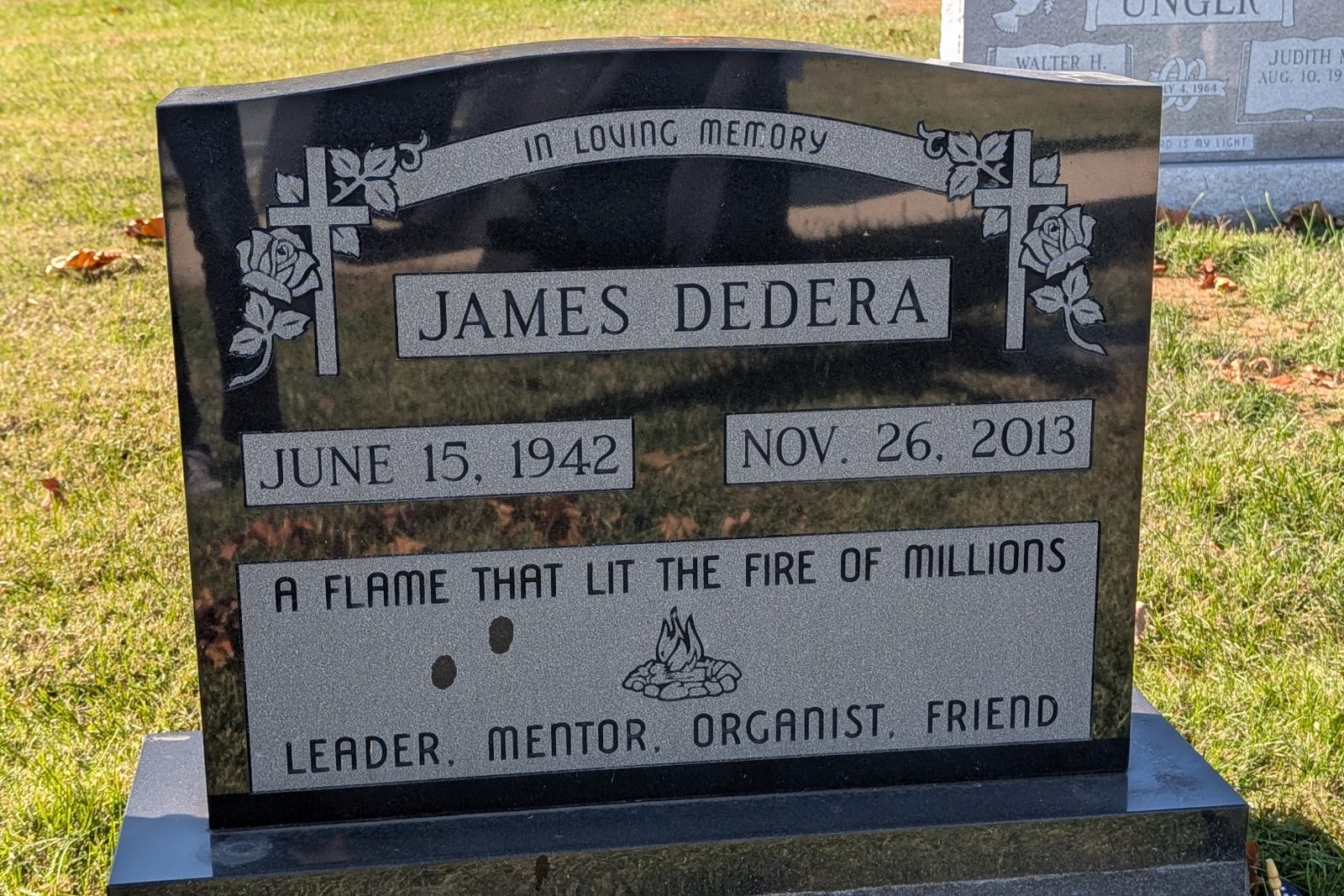
This week, as Christ the King approaches again, I visited his grave.
Liturgical Timing
The stone says what mattered: Leader. Mentor. Organist. Friend. And below that, a campfire - the scouting flame - with the words: A flame that lit the fire of millions.
I don't think the timing of his death was coincidence. I think it was fruit.
Jim was shaped by the liturgy his whole life. He sat at the organ bench Sunday after Sunday, year after year, playing the Church through her seasons. Advent to Christmas to Ordinary Time to Lent to Easter and back again. The liturgical calendar wasn't something he observed from the outside. It was the rhythm of his life.
And when he died, the calendar caught him.
The Tuesday after Christ the King. Buried on the last day of the liturgical year. The feast that says "He's got this" - and then the final breath of the year before Advent begins again.
A few weeks ago, at a formation day on pastoral care of the dying, we heard a phrase that has stayed with me: We die the way we live.
The pattern of your life becomes the pattern of your death. If you've spent decades cultivating gratitude, you will likely die grateful. If you've spent decades nursing resentment, that resentment doesn't magically dissolve in the final hours. The habits you build in ordinary time are the habits you'll have access to at the end.
Jim lived liturgically. He died liturgically.
What You Practice Becomes What You Are
The philosopher James K.A. Smith has written extensively about what he calls "cultural liturgies" - the idea that our daily and weekly practices shape us more than our beliefs do. In You Are What You Love, he argues that we are not primarily thinking beings but desiring beings, and that our desires are shaped by our habits.
"We become what we worship because we become what we love. And we love what we worship because worship is the arena in which our deepest longings and desires are formed."
The liturgy isn't just something we do on Sunday. It's something that does something to us. Week after week, year after year, the calendar reshapes our affections. We practice death on Good Friday and resurrection on Easter Sunday. We practice waiting in Advent and feasting in Christmas. We practice penance in Lent and joy in the Easter season.
And over decades, we become people who know how to wait, how to feast, how to grieve, how to hope.
Tish Harrison Warren, in Liturgy of the Ordinary, extends this insight to daily life. The small rituals - morning coffee, bedtime prayers, the commute - are liturgies too. They form us whether we intend them to or not.
"In the end, the practices that shape us most are not the ones we think about but the ones we don't - the habits so ingrained we barely notice them."
This is the question I've been carrying for years: What happens in the six days between Sundays? People come to church on Sunday. What's shaping them the other six days?
That question is why I built & Altar. It puts the Church's prayer into those six days - not a devotional written around a theme, but prayer based on the same Scripture the Church reads that day, every morning. Five minutes. Written for the person reading it - a father, a mother, a teenager, a widow. By app, email, or web. Short enough that your busiest families will do it, and will keep doing it.
It's the kind of daily practice that, over years, shapes who you become.
Jim's decades at the organ bench were not incidental to who he was. They were formative. The practice became the person.
The Transition
This past Sunday was my last regular homily at St. Elizabeth for a while. My preaching will slow down to every 5 or 6 weeks.
I preached on St. Elizabeth of Hungary, our patroness, and the bread she carried to the poor. I wove in what I'd learned at the formation day: that we die the way we live, and that the small choices we make in ordinary time are rehearsals for the final performance.
It felt like a fitting "last" homily. And it felt right to visit Jim's grave this week, as one chapter closes and another opens.
Starting this Sunday - Christ the King - I'm moving to the organ bench.
For the foreseeable future, I'll be playing at the 8 AM Mass, helping to shape the liturgy from a different seat. It's a return to something I did for nearly fifteen years before my ordination. And it's a continuation of something Jim did before me.
I'll be accompanying, supporting, shaping the prayer of the parish in a new way from behind the keys rather than from the pulpit.
I will be ramping up my sharing of reflections here on my blog and on Facebook and YouTube, so if you do miss me at the ambo, I plan to share even more here.
The irony isn't lost on me. One of the men who saw my capacity for service - who planted a seed that grew into ordination - was an organist. And now, thirteen years after his death, I'm returning to the bench he once held at the organ he designed and built as the current church was built around it.
The Calendar That Shapes Us
Pope Benedict XVI, in The Spirit of the Liturgy, wrote about how the liturgical calendar draws us into Christ's life:
"The rhythm of the liturgical year is not merely a kind of 'spiritual clock.' It is the Lord's own way of making himself present to us in time... We are drawn into the events we celebrate."
This is what happened to Jim. He was drawn in. Week after week, year after year, the calendar did its slow work. And when his time came, he died at the liturgically perfect moment - as if the calendar itself was making a point.
Romano Guardini, writing in the mid-twentieth century, warned that the modern world would try to detach us from these rhythms:
"The liturgical act is not something we do, but something we enter. It has its own rhythm, its own logic, its own power to form us - if we let it."
The question is whether we let it.
The world offers its own liturgies. The smartphone has its rituals - the morning scroll, the notification check, the evening doomscroll. The shopping mall has its seasons - back to school, holiday, spring sale. The news cycle has its rhythms, its crises, its manufactured urgencies.
James K.A. Smith calls these "secular liturgies," and he argues they are just as formative as sacred ones. The question isn't whether we're being shaped. The question is what's doing the shaping.
A New Liturgical Year
Next Sunday begins Advent, and with it another new liturgical year.
The trees are bare. November has done its work. We've thought about death, judgment, the four last things. And now we turn toward waiting - toward the light that is coming.
For me, this year's turn feels different. I'm stepping into something new, and I'm doing it in the wake of someone who shaped me. Jim is gone, but the bench is still there. The organ is still there. The calendar is still there.
What you practice becomes what you are.
I think about this as I prepare for the transition. The 8 AM Mass has its own character - a quieter congregation, a more traditional sensibility. Part of my work there will be helping to shape it toward what the Second Vatican Council actually intended: "full, conscious, and active participation" in a liturgy that retains its sense of the sacred.
Pope Leo XIV has been writing recently about this recovery of Vatican II's original vision - not the stripped-down minimalism that sometimes followed the Council, but the renewal of authentic liturgical prayer. That work is ongoing, and I'm glad to be part of it, even in a small parish in southern Illinois.
But the larger lesson is simpler. The calendar shapes us. The practices form us. What we do repeatedly, we become.
Jim knew this. He lived it. And in the end, he died it.
Christ the King
We're back where we started.
Christ the King is my favorite feast because it comes at the end. After all the apocalyptic readings, all the November gray, all the contemplation of death - the Church says: He's got this.
The King is on his throne. The ending is secure. Whatever comes, whatever you're facing, whatever you've lost - he's got this.
Jim is with him now. I believe that. The man who spent decades playing the Church's prayer is now part of the eternal liturgy - the one that doesn't follow a calendar because it doesn't need one.
And the rest of us are still here, still practicing.
What are you practicing?
What calendar is shaping you?
What will the rhythm of your life have made you by the time it ends?
A Model
Let me offer a simple framework - not original to me, but useful:
What you repeat, you rehearse. What you rehearse, you become.
The liturgical calendar is a system of repetition. We hear the same readings on a three-year cycle. We celebrate the same feasts every year. We pray the same prayers, make the same gestures, sing the same songs.
This isn't monotony. It's formation.
Every Sunday is a rehearsal. Every season is a rehearsal. Every liturgical year is a rehearsal. We're practicing resurrection, practicing hope, practicing waiting, practicing surrender.
And over decades, the practice becomes the person.
What practices are shaping you? What habits are you rehearsing? I'd be curious to hear what liturgies - sacred or secular - you've noticed forming your life.
Sources and Further Reading:
- James K.A. Smith, You Are What You Love: The Spiritual Power of Habit (Brazos Press, 2016)
- Tish Harrison Warren, Liturgy of the Ordinary: Sacred Practices in Everyday Life (IVP Books, 2016)
- Pope Benedict XVI (Joseph Ratzinger), The Spirit of the Liturgy (Ignatius Press, 2000)
- Romano Guardini, The Spirit of the Liturgy (Crossroad, 1998 edition; original 1918)
- Deacon Michael, "The Seeds That Form Us" (2026)
- Deacon Michael, "The Name Before the Work" (2026)
Comments
Sign in to leave a comment.