
Earlier this week, my wife Suzanne turned another year older.
We celebrated simply - nothing elaborate. The boys were in and out, but all here for her. She was in the mood for Sam's Club pizza and sushi, and the boys weren't disappointed.
Specific matters. Generic is easy. Specific requires attention.
Two days later, we sat at a table with family and contemplated what we were grateful for. And the question I carried into that meal was simple: Am I practicing specific gratitude, or am I coasting on generic?
Because what you give thanks for becomes what you are.
Thanksgiving Is a Liturgy
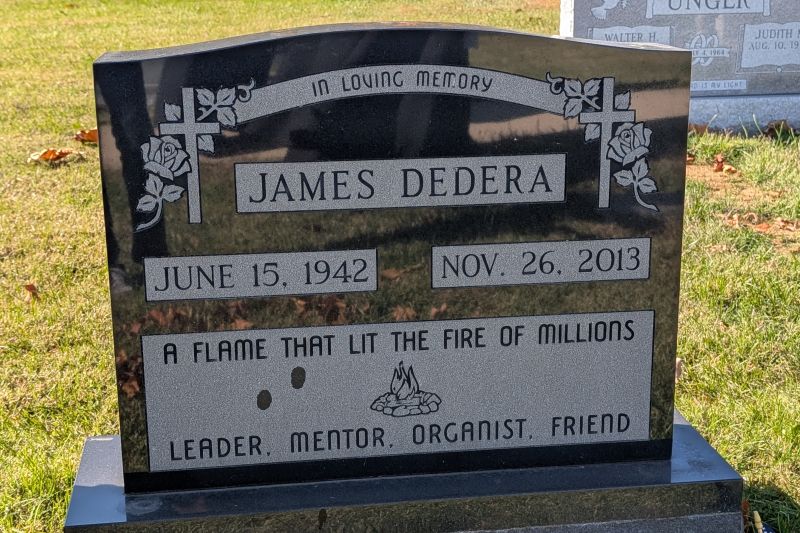
Last week I wrote about how our practices shape us - how what we repeat, we rehearse, and what we rehearse, we become. That piece was about Jim Dedera, the organist who was so formed by the liturgical calendar that even his death landed liturgically.
This week I want to apply the same insight to something most of us will do without thinking about it: sit at a table and give thanks.
Thanksgiving is not a feeling. It is a liturgy.
The word Eucharist means thanksgiving. The central act of Christian worship - the thing we do every Sunday, the thing the Church has done for two thousand years - is a thanksgiving meal. We receive gift. We name it. We offer it back.
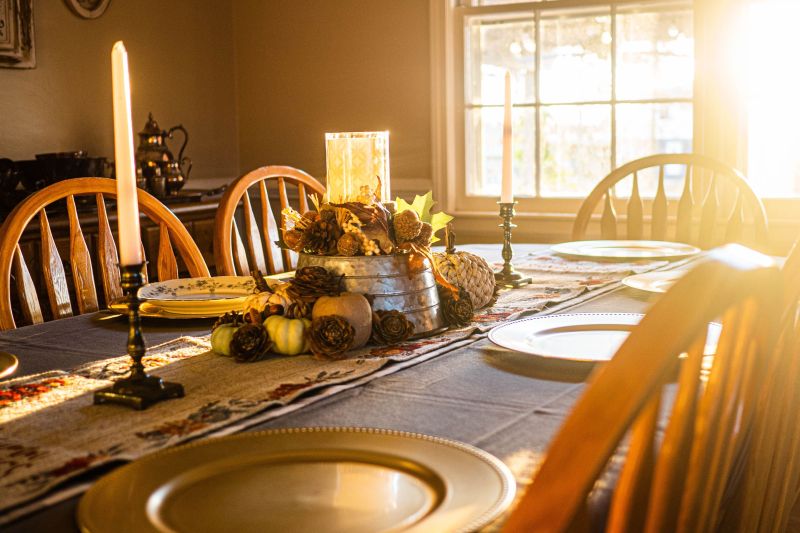
The table on Thursday is a domestic echo of that altar.
James K.A. Smith, in You Are What You Love, argues that our habits shape our desires more than our beliefs do. We become what we practice - not what we intend, not what we believe in theory, but what we actually do with our bodies, our words, our attention.
The Thanksgiving table is a practice. The question is whether we are practicing well.
Generic vs. Specific
Here is the difference:
Generic gratitude: "I'm thankful for my family."
Specific gratitude: "I'm thankful that my wife still laughs at the same jokes after all these years. I'm thankful that my son called last week to tell me something he didn't have to tell me. I'm thankful for the way my youngest looks up from whatever he's doing when I walk in the room."
Generic is easy. It costs nothing. It requires no attention to the particular.
Specific requires that you have been paying attention. That you have noticed. That you have received the gift as this gift, from this person, in this moment.
Tish Harrison Warren, in Liturgy of the Ordinary, writes about how small daily practices form us without our noticing. The morning routine. The way we greet each other. The habits so ingrained we barely see them.
The same is true of gratitude. If we practice generic gratitude - the rote, the vague, the "I'm blessed" that could apply to anyone - we are forming ourselves in inattention. We are rehearsing not-noticing.
If we practice specific gratitude - the concrete, the particular, the thing that could only be said about this person - we are forming ourselves in presence. We are rehearsing seeing.
The Mass as Gratitude
Pope Benedict XVI, in The Spirit of the Liturgy, writes about how the Mass draws us into Christ's own act of thanksgiving to the Father. The Eucharistic Prayer is not just something the priest says while we wait. It is the Church's gratitude made visible - the naming of gifts, the offering back, the acknowledgment that everything is received.
Romano Guardini, writing a century earlier, made the same point: liturgy is not something we watch. It is something we enter. And what we enter, we become.
The secular Thanksgiving table is a distant cousin of this. The shape is the same: we gather, we receive, we name what we have received. But whether it forms us depends on how we practice it.
If the gratitude is rushed - a quick round before the food gets cold - it forms us in hurry.
If the gratitude is generic - the same phrases every year - it forms us in inattention.
If the gratitude is specific, unhurried, actually spoken to the people in the room - it forms us in presence, in attention, in love.
The Tables That Will Include Absence
Part of November keeps pressing on me, though: The people currently around the table will not always be there.
I wrote about this a few weeks ago - how we die the way we live, how the pattern of our ordinary days becomes the pattern of our final ones. The same is true of gratitude. The capacity for specific thankfulness that you build in ordinary years is the capacity you will have when the chair is empty.
My wife's birthday came and went. Next year she will turn another year older, God willing. And the year after that. But there is no guarantee. There is never a guarantee.
The Thanksgiving table this year included everyone I love most. Next year may be different. The question is whether I practiced gratitude this year - specific, unhurried, actually spoken - or whether I coasted on generic.
What you practice, you become. And what you become is what you will have when the losses come.
A Framework for the Table
Here is what I tried to do this year:
1. Before the meal: Name one specific thing I am grateful for about each person who will be at the table. Not a category - a thing. Not "my son's hard work", but "the text he sent last Tuesday."
2. During the meal: When it's my turn to speak, say the specific thing. Not to perform - to practice. To rehearse seeing.
3. After the meal: Tell one person directly what I am grateful for about them. Not in the group - to them. Eye contact. No rush.
This is not complicated. It is also not easy. It requires that you have been paying attention. And it forms you in the habit of paying attention.
The Transition
Advent begins Sunday.
The liturgical year that started last December ends, and a new one begins. The table where we gave thanks on Thursday gives way to the season of waiting - for a gift we have not yet received, for a promise not yet fulfilled.
But the Advent posture is not so different from the Thanksgiving posture. Both require attention. Both require noticing. Both require the specific over the generic.
If you practiced specific gratitude on Thursday, you are ready for Advent. The same muscle - the one that notices, that receives, that names - is the one that will carry you through the waiting.
What you give thanks for becomes what you are.
And what you are is what you will bring to the manger.
What specific thing are you grateful for this year - the kind you might not have noticed if you weren't paying attention? I'd be curious to hear.
Sources and Further Reading:
- James K.A. Smith, You Are What You Love: The Spiritual Power of Habit (Brazos Press, 2016)
- Tish Harrison Warren, Liturgy of the Ordinary: Sacred Practices in Everyday Life (IVP Books, 2016)
- Pope Benedict XVI (Joseph Ratzinger), The Spirit of the Liturgy (Ignatius Press, 2000)
- Romano Guardini, The Spirit of the Liturgy (Crossroad, 1998 edition; original 1918)
- Deacon Michael, "What You Practice Becomes What You Are" (2026)

Comments
Sign in to leave a comment.